CDL CT Manual: A Comprehensive Guide (Updated 04/06/2026)
Today’s date is 04/06/2026! This comprehensive 154-page manual details everything needed to start a commercial driving career in Connecticut, covering all essential aspects.
What is the CDL CT Manual?
The Connecticut Commercial Driver License (CDL) Manual is a vital resource for anyone aspiring to operate large, heavy vehicles commercially within the state. This official publication, currently spanning 154 pages, serves as the primary study guide for obtaining a CDL.

It meticulously outlines the knowledge, skills, and requirements necessary to safely and legally operate various commercial vehicle types. The manual details everything from pre-trip inspections and basic control skills to on-road driving techniques and specific regulations governing commercial driving in Connecticut.
Currently, someone reading this manual is likely around page 8, representing approximately 5% completion – a testament to the thoroughness of the information provided. It’s the foundational text for prospective drivers.
Importance of the Connecticut CDL Manual
The Connecticut CDL Manual is critically important for several reasons. Firstly, it’s the definitive source of information for the CDL knowledge and skills tests. Success on these exams, and ultimately obtaining a CDL, hinges on understanding the manual’s contents.

Secondly, it emphasizes safe driving practices and adherence to state and federal regulations, contributing to highway safety for all. Ignoring the manual’s guidance can lead to failed tests, legal issues, and, most importantly, accidents.
Finally, it prepares individuals for a potentially exciting career as a truck driver, outlining the responsibilities and requirements involved. It’s the essential first step in a new professional journey.
Obtaining a Copy of the Connecticut CDL Manual
Securing a copy of the Connecticut CDL Manual is the initial step towards obtaining your commercial driver’s license. Fortunately, access is readily available! The Connecticut Department of Motor Vehicles (DMV) provides a downloadable PDF version directly on their official website.
This digital format allows for convenient study on various devices. Physical copies may also be obtainable at DMV offices throughout the state, though availability can vary. Checking the DMV website for the most up-to-date information regarding locations and hours is recommended.
Remember, having the current version of the 154-page manual is crucial for proper preparation.
CDL License Classes in Connecticut
Connecticut offers three primary CDL license classes, each designed for different types of commercial vehicle operation. Understanding these distinctions is vital for selecting the appropriate license for your intended career path. Class A CDL permits operation of any combination of vehicles with a Gross Vehicle Weight Rating (GVWR) exceeding 26,000 pounds.
Class B CDL is for single vehicles with a GVWR of 26,001 pounds or more, or any vehicle towing another not exceeding 10,000 pounds. Finally, Class C CDL covers vehicles not meeting the criteria for A or B, often transporting smaller loads or passengers.
Class A CDL
The Class A CDL is Connecticut’s most versatile commercial license, granting authorization to operate any combination of vehicles with a Gross Vehicle Weight Rating (GVWR) exceeding 26,000 pounds. This includes tractor-trailers, large combination trucks, and vehicles pulling substantial loads. Obtaining a Class A CDL requires passing comprehensive knowledge and skills tests.
These tests assess understanding of vehicle operation, pre-trip inspections, and safe driving practices. Successful candidates demonstrate proficiency in controlling large vehicles and adhering to all applicable traffic laws. This license opens doors to numerous long-haul trucking and heavy transport opportunities.
Class B CDL
A Class B CDL in Connecticut authorizes operation of single vehicles with a GVWR exceeding 26,000 pounds, or any vehicle towing another not exceeding 10,000 pounds. This commonly includes straight trucks, buses, and large delivery vehicles. While less expansive than a Class A, it still demands rigorous testing and demonstrates a commitment to safe, professional driving.

The Class B license is ideal for local and regional delivery jobs, school bus driving, and other roles not requiring tractor-trailer operation. Passing the required knowledge and skills tests proves competency in handling larger, heavier vehicles and adhering to stringent safety regulations.
Class C CDL

Connecticut’s Class C CDL is designed for vehicles not meeting the definitions of Class A or B, but still requiring a commercial driver’s license. This often includes vehicles transporting hazardous materials in smaller quantities, or vehicles with a GVWR of 26,001 pounds or more, but not designed to tow.
A Class C license is frequently sought by drivers operating dump trucks, passenger vehicles carrying 16 or more passengers (including the driver), and vehicles requiring a hazardous materials endorsement. Obtaining this license necessitates passing specific knowledge and skills tests tailored to the vehicle type and any applicable endorsements.
Medical Requirements for Connecticut CDL
Securing a Connecticut Commercial Driver’s License (CDL) demands meeting stringent medical standards to ensure driver fitness. These requirements are federally mandated and enforced by the state of Connecticut. All CDL applicants must possess a valid Medical Examiner’s Certificate, commonly known as a DOT physical, issued by a certified medical examiner listed on the FMCSA National Registry.

This examination assesses vision, hearing, cardiovascular health, and neurological function. Drivers with certain medical conditions may require waivers or further evaluation. Maintaining a valid medical certificate is crucial for continued CDL validity.
Medical Examination Certificate (DOT Physical)
The DOT Physical, or Medical Examination Certificate, is a critical step in obtaining a Connecticut CDL. This comprehensive health assessment, performed by a registered medical examiner, evaluates a driver’s physical and mental fitness for commercial operation. The exam includes vision and hearing tests, blood pressure and pulse checks, and a review of medical history.
The certificate is valid for a maximum of 24 months, and renewal requires another physical. Drivers must present this certificate to the DMV to obtain or maintain their CDL. Finding a certified examiner is easily done through the FMCSA National Registry website.
Medical Waiver Information
Connecticut CDL applicants who don’t initially meet DOT physical standards may be eligible for medical waivers, allowing them to operate commercial vehicles under specific conditions. These waivers are granted by the Federal Motor Carrier Safety Administration (FMCSA) and require thorough documentation and medical evaluations.
Common waivers address conditions like diabetes, high blood pressure, or vision impairments. Obtaining a waiver involves submitting a detailed application, including medical reports and a proposed operational plan. The FMCSA carefully reviews each case to ensure public safety. Information and applications are available on the FMCSA website.
Residency Requirements for Connecticut CDL
To obtain a Connecticut Commercial Driver’s License (CDL), applicants generally must establish residency within the state. This doesn’t necessarily mean being a Connecticut native, but it does require demonstrating a genuine intent to reside in Connecticut. Acceptable documentation includes a Connecticut driver’s license (non-CDL), utility bills in your name, or a lease agreement.
Non-residents seeking a Connecticut CDL for employment purposes may be granted a temporary license. However, establishing residency is ultimately required for a full, unrestricted CDL. Specific requirements and accepted forms of proof are detailed on the Connecticut DMV website.
Knowledge Test Preparation
Successful completion of knowledge tests is crucial for obtaining your Connecticut CDL. Thorough preparation using the official Connecticut CDL Manual is highly recommended. The manual covers general knowledge, combination vehicles, and specialized endorsements like hazardous materials. Practice tests, available online and through some driving schools, can help reinforce learning and identify areas needing further study.
Focus on understanding regulations, safe driving practices, and vehicle systems. Familiarize yourself with Connecticut-specific laws and procedures. Dedicate sufficient time to studying – don’t underestimate the complexity of the material. Proper preparation significantly increases your chances of passing the exams.
General Knowledge Test
The General Knowledge test forms the foundation of your CDL assessment in Connecticut. This test evaluates your understanding of basic vehicle operation, traffic laws, and safe driving principles applicable to all commercial vehicles. Expect questions covering topics like air brakes, cargo securement, distracted driving, and hours of service regulations.
A passing score demonstrates competency in fundamental knowledge essential for safe commercial operation. Thorough study of the Connecticut CDL Manual is paramount. Focus on understanding, not just memorizing, the information presented. Practice tests are invaluable for gauging your readiness and identifying areas for improvement before the official exam.
Combination Vehicles Test
Successfully operating combination vehicles – those involving a tractor and one or more trailers – requires specialized knowledge. The Connecticut Combination Vehicles Test assesses your understanding of the unique challenges presented by these configurations. Expect questions regarding coupling and uncoupling procedures, proper air brake usage for combined units, and the effects of weight distribution on handling.
Mastering concepts like off-tracking, rollovers, and braking distances is crucial for a passing score. The CDL manual provides detailed explanations and illustrations; Practice visualizing how different maneuvers impact the vehicle’s behavior. This test builds upon the General Knowledge base, so a solid foundation is essential for success.
Hazardous Materials Endorsement Test
Securing a Hazardous Materials (Hazmat) endorsement demands rigorous preparation and a thorough understanding of regulations. The Connecticut Hazmat Endorsement Test focuses on the safe handling and transportation of dangerous goods. Expect detailed questions covering hazard classes, proper placarding, emergency response procedures, and shipping documentation requirements.
You’ll need to demonstrate knowledge of route planning restrictions, security protocols, and the consequences of improper handling. The CDL manual’s Hazmat section is critical study material. Passing this test also involves a TSA background check, ensuring suitability for handling sensitive materials. Prioritize safety and compliance!
Skills (Road) Test Requirements
The Connecticut CDL skills (road) test comprehensively evaluates your ability to operate a commercial vehicle safely and legally. This test consists of three crucial parts: a pre-trip inspection, basic control skills, and the on-road driving test. You must demonstrate proficiency in identifying vehicle defects during the pre-trip inspection.
Basic control skills assess your ability to maneuver the vehicle accurately. The on-road portion tests your driving skills in real-world traffic conditions, including lane changes, turns, and maintaining safe following distances. Examiners will assess adherence to traffic laws and safe driving practices.
Pre-Trip Inspection
The pre-trip inspection is a critical component of the CDL skills test in Connecticut, demanding a thorough understanding of vehicle systems. You’ll be required to walk around the vehicle and verbally identify key components, explaining what you’d look for to ensure safe operation. This includes checking lights, tires, brakes, steering, and coupling devices.
Examiners assess your ability to detect potential defects. Knowing the location and function of each part is vital. A systematic approach is recommended, covering all essential areas. Demonstrating a clear understanding of vehicle safety is paramount for a passing score.

Basic Control Skills
Mastering basic control skills is essential before tackling the open road. The Connecticut CDL skills test includes exercises designed to evaluate your vehicle handling proficiency. These typically involve straight-line backing, offset alley docking, and parallel parking – all within a controlled environment.
Examiners will observe your smoothness, accuracy, and overall control of the vehicle. Practicing these maneuvers repeatedly builds muscle memory and confidence. Understanding proper steering techniques and utilizing mirrors effectively are crucial for success. Demonstrating competence in these fundamental skills is a key step towards earning your CDL.
On-Road Driving Test
The on-road driving test is the final hurdle in obtaining your Connecticut CDL. This evaluation assesses your ability to safely operate a commercial vehicle in real-world traffic conditions. Expect to demonstrate skills like lane changes, merging onto highways, maintaining safe following distances, and responding appropriately to traffic signals.
Examiners will scrutinize your adherence to traffic laws, defensive driving techniques, and overall judgment. Maintaining a consistent speed, proper signaling, and awareness of surroundings are paramount. Successful completion signifies you possess the necessary skills to navigate Connecticut’s roadways safely and responsibly.
Endorsements Available in Connecticut
Connecticut offers several CDL endorsements to expand your driving privileges and career opportunities. These endorsements require additional testing and certification beyond the standard CDL requirements. Popular options include the Hazardous Materials (Hazmat) endorsement, demanding a thorough background check and specialized knowledge assessment.
The Tanker endorsement is crucial for transporting liquids in bulk, while the Passenger endorsement allows operation of vehicles carrying passengers. Obtaining these endorsements demonstrates specialized skills and opens doors to diverse trucking sectors. Review the CT CDL manual for specific requirements and application procedures for each endorsement.
Hazardous Materials (Hazmat) Endorsement
Securing a Hazardous Materials (Hazmat) endorsement in Connecticut demands rigorous scrutiny beyond standard CDL testing. This includes a comprehensive background check conducted by the Transportation Security Administration (TSA), ensuring suitability for handling dangerous goods. Applicants must pass a specialized knowledge test focusing on hazard recognition, emergency response, and proper loading/unloading procedures.
Understanding placarding requirements, shipping papers, and emergency protocols is vital. The Hazmat endorsement unlocks opportunities in specialized trucking sectors, but requires ongoing commitment to safety regulations and security protocols. Consult the CT CDL manual for detailed guidelines and application processes.
Tanker Endorsement
The Tanker Endorsement in Connecticut is crucial for drivers transporting liquid or gaseous materials in bulk within tanker vehicles. Obtaining this endorsement necessitates passing a dedicated knowledge test assessing understanding of unique handling characteristics and potential hazards associated with these loads.
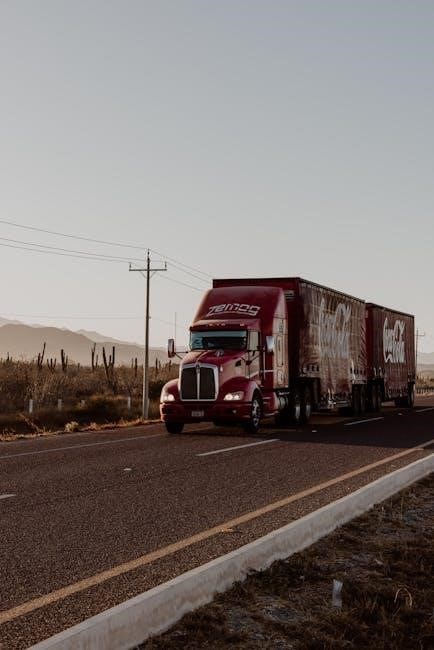
Drivers must demonstrate proficiency in surge control, baffle effects, and proper loading/unloading procedures to prevent accidents. This endorsement expands career options within the petroleum, chemical, and food grade liquid transport industries. Thorough study of the CT CDL manual’s tanker section is essential for successful test completion and safe operation.
Passenger Endorsement

The Passenger Endorsement is required in Connecticut for operating any vehicle designed to transport sixteen or more passengers, including the driver. Securing this endorsement demands passing a specialized knowledge test focused on passenger safety, emergency procedures, and vehicle operation specific to larger passenger vehicles.
Drivers must understand regulations concerning passenger loading, seating, and conduct, as well as procedures for handling medical emergencies and maintaining vehicle security. This endorsement unlocks opportunities in school bus transportation, charter bus services, and public transit. Diligent study of the CT CDL manual’s passenger section is vital for passing the test.