
Honeywell Burner Control Manual PDF: A Comprehensive Guide
Honeywell combustion controls are versatile, spanning diverse industrial burner operations. Accessing a PDF manual ensures proper installation, troubleshooting, and maintenance of these critical components.
Understanding Honeywell Burner Controls
Honeywell burner controls represent a cornerstone of safe and efficient combustion systems across numerous applications, from residential heating to large-scale industrial processes. These controls meticulously manage the ignition, operation, and safety features of burners, ensuring reliable performance and preventing hazardous conditions. The Honeywell Combustion Controls portfolio is remarkably versatile, encompassing a wide array of products designed for various burner types and fuel sources.
Key to understanding these systems is recognizing Honeywell’s leadership in Flame Safeguard controls. These devices continuously monitor the flame, shutting down the fuel supply if a flameout occurs, preventing unburnt fuel accumulation. Models like the RM7895A1014 (On-Off Primary Control) and the R8184M1051 (Protectorelay Oil Burner Control) exemplify this commitment to safety and precision. The 7800 Series further demonstrates Honeywell’s adaptability, replacing over 400 older control types, offering broad compatibility and simplified replacements.
The Importance of a PDF Manual
A comprehensive PDF manual is absolutely crucial when dealing with Honeywell burner controls; These systems are complex, requiring precise installation, configuration, and maintenance to ensure safe and efficient operation. The manual provides detailed wiring diagrams and schematics, essential for correct setup and troubleshooting. It outlines critical safety precautions and warnings, minimizing the risk of accidents or malfunctions.
Furthermore, the PDF format offers unparalleled accessibility and convenience. It allows for easy searching of specific model numbers (like RM7895A1014 or R8184M1051) and quick reference to relevant sections. Understanding lockout timing (e.g., the 45-second lockout on the R8184M1051) and pre-purge functionality, as explained in the manual, is vital for proper operation. Having a readily available PDF ensures technicians and operators can quickly diagnose and resolve issues, reducing downtime and maintaining system integrity.
Honeywell Combustion Control Products Overview
Honeywell Combustion Controls boasts a remarkably versatile product line, recognized across virtually all combustion operations. Their offerings extend beyond basic burner controls to include temperature control and recording components, demonstrating a long-standing commitment to the industry. Models like the RM7895A1014 (On-Off Primary Control) and the R8184M1051 (Protectorelay Oil Burner Control) exemplify this breadth.
The 7800 Series stands out for its adaptability, capable of replacing over 400 Honeywell and competitor control types, serving applications from boilers to rooftop units. Understanding the differences between genuine Honeywell controls and rebuilt units, as highlighted by Honeywell themselves, is crucial. These controls adhere to stringent industry standards and codes, ensuring safety and reliability. Accessing the correct PDF manual for your specific model is the first step in understanding and maintaining these sophisticated systems, guaranteeing optimal performance and longevity.

Specific Honeywell Burner Control Models
Honeywell offers diverse models like RM7895A1014, R8184M1051, and the versatile 7800 Series, each with unique features detailed in their respective PDF manuals.
RM7895A1014: On-Off Primary Control
The Honeywell RM7895A1014 is an On-Off Primary Control with PrePurge functionality, designed for intermittent pilot systems. This model, readily available with a SKU of RM7895A1014, is a cornerstone of many heating systems. Its PDF manual is crucial for installers and technicians, detailing the specific wiring configurations and safety protocols required for proper operation.
Understanding the manual allows for correct setup of the pre-purge sequence, ensuring safe and efficient burner startup. The manual provides detailed schematics and troubleshooting guides, assisting in diagnosing and resolving common issues. Proper installation, guided by the PDF, is vital for maintaining the integrity of the flame safeguard system. Availability is generally good, with potential for quick delivery – currently estimated as getting 16 units by April 2nd. Always refer to the official Honeywell documentation for the most accurate and up-to-date information regarding this control.
R8184M1051: Protectorelay Oil Burner Control
The Honeywell R8184M1051 is a Protectorelay Oil Burner Control, distinguished by its 45-second lockout timing. This feature is a critical safety mechanism, preventing prolonged fuel delivery in case of ignition failure. The corresponding PDF manual is essential for understanding this timing and its implications for system safety and troubleshooting. It details the control’s operation, wiring diagrams, and fault code interpretations.
Honeywell Combustion Controls products, like the R8184M1051, are renowned for their versatility and reliability. The manual provides guidance on integrating this control into various oil burner systems, ensuring optimal performance and adherence to safety standards. It’s crucial to differentiate between genuine Honeywell controls and rebuilt units, as the manual emphasizes the importance of using original components for consistent safety and functionality. Accessing the PDF allows technicians to confidently install, maintain, and repair this vital burner component.
7800 Series Burner Controls: Versatility and Replacement
The Honeywell 7800 Series Burner Controls are celebrated for their exceptional versatility, applicable to a broad spectrum of commercial and industrial applications – from burners and boilers to furnaces, ovens, and even hot water heaters. A comprehensive PDF manual is paramount for unlocking this versatility, detailing configuration options and compatibility across diverse systems.
Remarkably, the 7800 Series is designed as a direct replacement for over 400 Honeywell and competitor control types. The PDF manual simplifies this replacement process, providing cross-reference guides and clear installation instructions. It’s a vital resource for technicians seeking to upgrade or maintain existing equipment. Understanding the specific features and functionalities available within the 7800 Series, as outlined in the manual, ensures optimal burner control and efficient operation. Proper utilization of the manual guarantees a seamless transition and maximized performance.
RM7890B1055: Relay Modules & Compatibility
The Honeywell RM7890B1055 is a crucial component within the 7800 Series, functioning as a relay module. A detailed PDF manual is essential for understanding its integration and compatibility with various burner systems. The manual provides specific wiring diagrams and technical specifications, ensuring correct installation and operation.
Compatibility information within the PDF clarifies which 7800 Series controls the RM7890B1055 supports, alongside any necessary interface modules. It details the module’s origin (Mexico in this case) and Harmonized Code for accurate parts ordering. The manual also addresses alternative part numbers (like 00085267773706) for easier sourcing. Proper understanding of the RM7890B1055’s role, as explained in the PDF, is vital for maintaining the reliability and safety of the overall burner control system. Accessing this information streamlines troubleshooting and minimizes downtime.

Key Features and Functions
Honeywell burner controls boast flame safeguard technology, pre-purge functionality, and lockout timing (like 45-second lockouts) for enhanced safety and operational efficiency.
Flame Safeguard Controls: Honeywell’s Leadership
Honeywell has established itself as an industry leader in the development and manufacturing of Flame Safeguard controls, a crucial component in ensuring safe and reliable combustion processes. These controls are designed to prevent the operation of a burner without a stable flame, mitigating the risk of fuel accumulation and potential explosions.
The company emphasizes the importance of using genuine Honeywell controls over rebuilt or independent alternatives, highlighting potential differences in performance and safety standards. Understanding the nuances of these controls is paramount for technicians and operators alike. A comprehensive PDF manual provides detailed insights into the operation, maintenance, and troubleshooting of these systems.
These controls adhere to stringent industry standards and codes governing burners and boilers, ensuring compliance and optimal performance. Proper installation and regular maintenance, guided by the manual, are essential for maximizing the lifespan and effectiveness of Honeywell Flame Safeguard controls.
Pre-Purge Functionality Explained
The pre-purge function, integral to Honeywell burner controls like the RM7895A1014, is a critical safety feature. Before ignition, the control initiates a pre-purge cycle, thoroughly venting any accumulated unburned fuel from the combustion chamber. This process prevents dangerous flashbacks or explosions during startup.
A detailed PDF manual outlines the specific timing and sequence of the pre-purge cycle for each control model. Understanding this functionality is vital for proper installation and troubleshooting. The manual will detail how the control monitors flame presence during and after the purge, ensuring a safe ignition sequence.
Properly functioning pre-purge ensures a clean and safe combustion environment. The Honeywell manual provides clear instructions on verifying the pre-purge operation, including testing procedures and expected results. Ignoring this step can compromise safety and lead to inefficient burner operation.
Lockout Timing and Safety Mechanisms (45-Second Lockout)
Honeywell burner controls, such as the R8184M1051 Protectorelay, incorporate robust safety mechanisms, including lockout timing. A 45-second lockout is a common feature, designed to prevent repeated ignition attempts after a flame failure. This safeguards against fuel accumulation and potential hazards.
The PDF manual details the lockout sequence and reset procedures. After a flame failure, the control will attempt re-ignition for a set period, then enter lockout. Manual reset is typically required, ensuring a technician investigates the cause of the failure before restarting. Understanding the lockout process is crucial for efficient troubleshooting.
The manual explains how to interpret lockout indicators and diagnose underlying issues. It also outlines safety precautions when resetting a locked-out control. Ignoring lockout signals or bypassing safety features can lead to dangerous conditions. Honeywell prioritizes safety, and the manual reflects this commitment.
Compatibility with Various Burner Types
Honeywell burner controls demonstrate remarkable versatility, compatible with a wide array of burner types and applications. The 7800 Series, for example, can operate with burners found in boilers, furnaces, ovens, kilns, and even rooftop units. The PDF manual details specific compatibility charts and wiring configurations for different fuel types – oil, gas, and more.
Understanding compatibility is vital for correct installation and safe operation. The manual clarifies which control models are suitable for specific burner capacities and operating pressures. It also addresses considerations for intermittent pilot and direct ignition systems.
Furthermore, the PDF provides guidance on adapting Honeywell controls to replace older, competitive models. With the 7800 Series alone capable of replacing over 400 different control types, the manual simplifies the upgrade process. Proper compatibility ensures optimal performance and longevity of the burner system.
Manual Contents and Sections
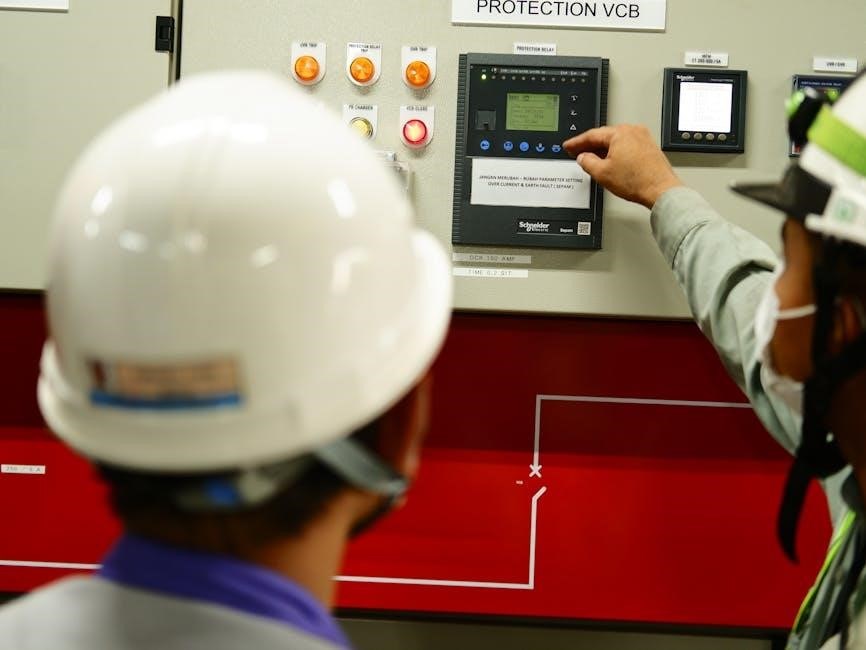
Honeywell burner control manuals comprehensively cover safety precautions, installation, wiring diagrams, and troubleshooting. They provide detailed guidance for proper operation and maintenance procedures.
Safety Precautions and Warnings
Honeywell burner control manuals prioritize safety, emphasizing the critical need for qualified personnel to handle installation, adjustment, and maintenance. Burner systems operate with potentially hazardous fuels, demanding strict adherence to all safety guidelines.
The manuals clearly outline warnings against attempting repairs or modifications without proper training and authorization. Disconnecting power before working on any control system is paramount, preventing electrical shock hazards.
Specific cautions address the dangers of gas leaks, fire, and explosion, stressing the importance of leak testing and proper ventilation. Understanding lockout timing – like the 45-second lockout featured in models like the R8184M1051 – is crucial for recognizing and addressing potential safety issues.
Furthermore, manuals highlight the necessity of using only genuine Honeywell controls, as rebuilt units may not meet safety standards. Always consult local codes and regulations to ensure compliance and safe operation of the burner system.
Installation Instructions
Honeywell burner control manual PDFs provide detailed, step-by-step installation instructions tailored to each model, such as the RM7895A1014 On-Off Primary Control and the versatile 7800 Series. These guides emphasize the importance of verifying voltage requirements and proper grounding before commencing installation.
Wiring diagrams and schematics are integral components, illustrating correct connections for power, flame sensors, and safety devices. The manuals specify appropriate wire gauges and terminal connections to ensure reliable operation.

Pre-purge functionality, a key feature in many Honeywell controls, requires careful configuration during installation. Proper setup of lockout timing, like the 45-second lockout in the R8184M1051, is also critical.
The manuals also detail mounting procedures, ensuring secure and vibration-resistant installation. Following these instructions meticulously guarantees optimal performance and longevity of the burner control system.
Wiring Diagrams and Schematics
Honeywell burner control manual PDFs prominently feature comprehensive wiring diagrams and schematics, essential for correct installation and troubleshooting. These diagrams detail connections for various models like the RM7895A1014, R8184M1051, and the adaptable 7800 Series.
Schematics illustrate the flow of electricity through the control system, including power supply, flame sensing circuits, safety relays, and lockout mechanisms. Clear labeling of terminals and components is a key feature, simplifying the wiring process.
The diagrams often include multiple configurations to accommodate different burner types and safety requirements. Understanding these schematics is crucial for identifying potential wiring errors and ensuring proper operation of the flame safeguard controls.
PDF manuals provide detailed explanations of symbols used in the diagrams, aiding technicians in interpreting the complex circuitry. Accurate wiring, guided by these schematics, is paramount for safe and reliable burner operation.
Troubleshooting Common Issues
Honeywell burner control manual PDFs dedicate significant sections to troubleshooting, assisting technicians in diagnosing and resolving operational problems. Common issues addressed include lockout conditions – often a 45-second lockout with models like the R8184M1051 – and flame failure detection.

The manuals provide systematic troubleshooting charts, guiding users through a series of checks based on observed symptoms. These charts cover potential causes, such as faulty flame sensors, wiring issues, or gas supply problems.
Specific guidance is offered for models like the RM7895A1014 and the versatile 7800 Series, detailing unique failure modes and corrective actions. Understanding the pre-purge functionality, as outlined in the manual, is vital for resolving startup issues.
PDFs emphasize safety precautions during troubleshooting, warning against working on live circuits. They also highlight the importance of verifying genuine Honeywell controls to avoid compatibility issues with rebuilt units.

Accessing and Utilizing PDF Manuals
Honeywell provides manuals on their official website, while third-party archives offer access. Searching by specific model numbers—like RM7895A1014—ensures accurate documentation.
Honeywell Official Website Resources
Honeywell’s official website serves as the primary and most reliable source for accessing comprehensive burner control manuals in PDF format. Navigating the site typically involves utilizing the search function and inputting the specific model number of your control – for example, “RM7895A1014” or “R8184M1051”. This direct approach ensures you obtain the correct documentation tailored to your particular device.
The website often categorizes manuals by product line, such as combustion controls, simplifying the search process. Beyond the core manuals, Honeywell frequently provides supplementary materials like application guides, technical bulletins, and wiring diagrams. These resources enhance understanding and facilitate effective troubleshooting. Registration may be required to access certain documents, but it grants access to the latest revisions and updates.
Furthermore, Honeywell’s support section offers FAQs and contact information for direct assistance should you encounter difficulties locating or understanding the manual content. Prioritizing the official website guarantees authenticity and accuracy, crucial for safe and efficient operation of your burner control system.
Third-Party PDF Archive Websites
While Honeywell’s official website is preferred, numerous third-party PDF archive websites host digitized versions of burner control manuals. These platforms can be valuable when the official source is unavailable or difficult to navigate. However, exercising caution is paramount, as the accuracy and completeness of documents on these sites aren’t always guaranteed.
Popular options include websites specializing in industrial equipment documentation. Searching using the precise model number (e.g., “RM7890B1055”, “7800 Series”) is crucial for narrowing results. Always verify the document’s source and date to ensure it corresponds to your specific control version. Be wary of outdated or incomplete manuals.
It’s advisable to cross-reference information found on third-party sites with the official Honeywell documentation whenever possible. These archives can supplement official resources, but should not be considered a replacement for them. Prioritize safety and accuracy by confirming critical details before implementing any instructions.
Searching for Specific Model Numbers
Locating the correct PDF manual hinges on accurately identifying your Honeywell burner control’s model number. These are typically found on a label affixed directly to the control unit itself. Common examples include RM7895A1014, R8184M1051, and RM7890B1055. Note any suffixes or revisions indicated on the label, as these denote specific versions.
When searching Honeywell’s website or third-party archives, input the entire model number for precise results. Avoid using partial numbers or generic terms like “7800 Series” without specifying the exact configuration. Utilizing advanced search operators (e.g., quotation marks for exact phrases) can refine your search.
If the label is damaged or illegible, consult equipment documentation or contact a qualified technician for assistance. Incorrect manuals can lead to improper installation, operation, or troubleshooting, potentially compromising safety and performance. Always double-check the manual’s applicability before proceeding.
PDF Reader Software and Compatibility
Honeywell burner control manuals in PDF format are widely compatible with most modern PDF reader software. Adobe Acrobat Reader is the industry standard and is available as a free download. However, alternative readers like Foxit Reader, SumatraPDF, and even web browsers (Chrome, Firefox, Edge) can also open and view these files.
Ensure your chosen PDF reader is up-to-date to guarantee optimal rendering of diagrams, schematics, and text formatting. Older versions may exhibit display issues or compatibility problems. Most manuals are optimized for standard screen resolutions, but zooming may be necessary for detailed viewing.
While generally compatible, complex manuals with embedded fonts or interactive elements might function best within Adobe Acrobat Reader. If encountering difficulties, try a different reader or download the latest version of your current software. Compatibility issues are rare, but addressing them ensures a smooth user experience.
Maintenance and Repair Considerations
Regular maintenance is crucial for Honeywell burner controls. Distinguish between genuine Honeywell parts and rebuilt units, adhering to industry standards for safe operation.
Importance of Regular Maintenance
Consistent, scheduled maintenance is paramount for ensuring the longevity and safe operation of your Honeywell burner control systems. Neglecting routine checks can lead to diminished performance, unexpected failures, and potentially hazardous situations. A well-maintained control system optimizes combustion efficiency, reducing energy consumption and associated costs.
Regularly inspect wiring connections for corrosion or damage, ensuring secure and reliable electrical pathways. Clean components to remove dust, debris, and contaminants that can impede functionality. Verify the proper operation of safety features, such as lockout mechanisms and flame safeguard controls. Following the guidelines outlined in the Honeywell burner control manual PDF is essential for performing these tasks correctly.

Proactive maintenance minimizes the risk of downtime and costly repairs. By identifying and addressing minor issues early on, you can prevent them from escalating into major problems. Remember, Honeywell emphasizes the importance of using genuine replacement parts to maintain the integrity and performance of their controls.
Recognizing Genuine Honeywell Controls vs. Rebuilt Units
Honeywell, as a leading manufacturer of Flame Safeguard controls, strongly advises caution when considering rebuilt or reconditioned units. While seemingly cost-effective, rebuilt controls may not meet the stringent safety and performance standards of genuine Honeywell products. Rebuilt units often lack the assurance of thorough testing and may contain worn or substandard components.

Genuine Honeywell controls are manufactured to precise specifications, ensuring reliable operation and compatibility with your burner system. They undergo rigorous quality control procedures to guarantee optimal performance and adherence to industry codes. Look for the authentic Honeywell branding and part numbers to verify authenticity.
The Honeywell burner control manual PDF often details specific features and markings that distinguish genuine products. Investing in genuine controls provides peace of mind, knowing you’re utilizing a reliable and safe system. Compromising on quality can lead to increased risks and potential system failures, ultimately outweighing any initial cost savings.
Understanding Industry Standards and Codes
Honeywell burner controls are designed to comply with a multitude of industry standards and codes governing burner and boiler equipment. These regulations are crucial for ensuring safe and efficient operation, minimizing risks, and meeting legal requirements. Familiarity with these standards is paramount for installers, technicians, and maintenance personnel.
The Honeywell burner control manual PDF frequently references relevant codes and standards, providing guidance on proper installation, wiring, and safety procedures. These may include standards set by organizations like the National Fire Protection Association (NFPA) and local regulatory bodies.
Adhering to these standards isn’t merely about compliance; it’s about protecting life and property. Proper installation and maintenance, guided by the manual and industry codes, are essential for preventing malfunctions, fires, and explosions. Always consult the latest editions of applicable codes and regulations when working with Honeywell burner controls.
When to Consult a Qualified Technician
While the Honeywell burner control manual PDF provides extensive troubleshooting guidance, certain situations demand the expertise of a qualified technician. Attempting complex repairs without proper training can be dangerous and may void warranties.
Specifically, if you encounter issues beyond basic troubleshooting steps outlined in the manual – such as persistent lockouts, unusual flame patterns, or suspected gas leaks – immediately contact a certified professional. Similarly, any modifications to the burner system or control wiring should be performed by a qualified technician.
Furthermore, when dealing with older systems or unfamiliar Honeywell control models, professional assistance is highly recommended. A technician possesses the necessary knowledge, tools, and experience to diagnose and resolve issues safely and effectively, ensuring optimal performance and adherence to industry standards.